888-450-3725
In this article
- What are standard custom box dimensions?
- What Are Custom Box Dimensions?
- How Box Size Is Measured
- Why Box Size Matters
- Quick Answer: What Is a Standard Box Size?
- Custom Box Dimensions Chart
- Box Dimensions by Style
- Print & Dieline Guidelines
- How to Choose the Right Box Size for Your Product
- Box Sizing Tips
- Common Box Sizing Mistakes
- Need a Custom Box Supplier?
- Final Thoughts
The right box size sells your product, protects it in transit, and keeps your shipping bill low. The wrong one rattles, crushes, or costs you extra in wasted space. Custom box dimensions are simply the length, width, and height of a box made to fit your exact product. At Discount Box Printing, we make boxes to any size you need, factory-direct across the United States. This guide walks through how box sizes are measured, the standard sizes most brands use, a full size chart, and the print specs you need before you order. To browse styles, start with our custom mailer boxes and custom shipping boxes ranges.
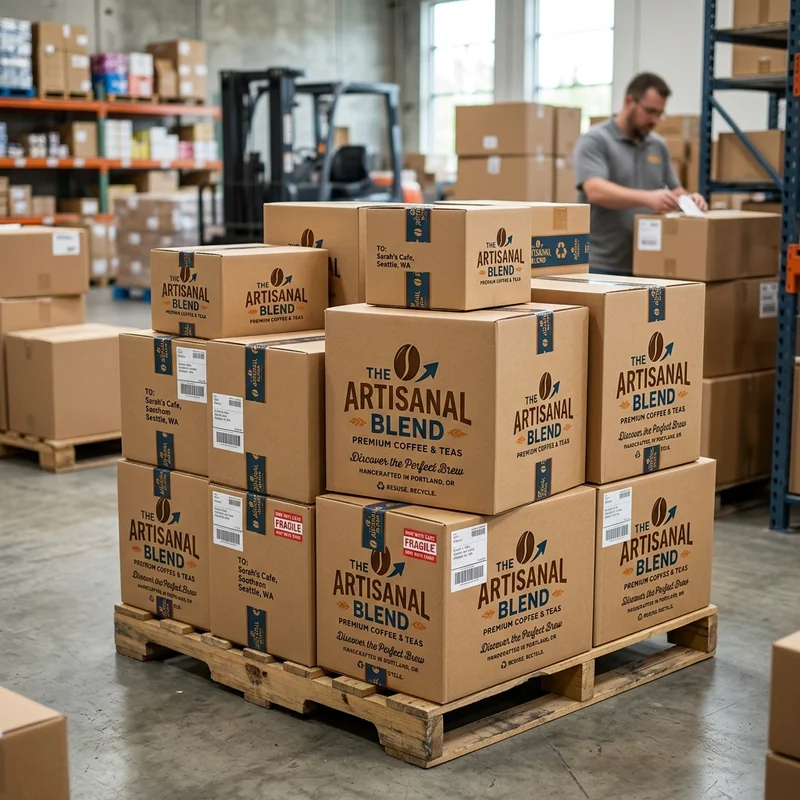
What are standard custom box dimensions?
Custom box dimensions are always read as length × width × height (L×W×H) using inside dimensions for folding cartons, corrugated, and mailers, and outside dimensions for rigid boxes. Sizes are fully custom to your product plus a small clearance for inserts and DIM weight control. At Discount Box Printing we make custom boxes to any size factory-direct from $0.10 per unit. Beat any custom-box quote.
- Read order: L × W × H (longest × shorter × upright)
- Inside vs. outside: inside for folding & corrugated, outside for rigid
- Clearance: +1/16” for cartons, +1/4” for shipping boxes
- Material: SBS, kraft, corrugated E/B/C flute, rigid greyboard
- DIM weight: L×W×H ÷ 139 for USPS/UPS/FedEx
- Turnaround: 10–12 business days (rush 6–8 available)
- Price from: $0.10 per unit wholesale · free US shipping
- Made in: USA, factory-direct — ships nationwide
What Are Custom Box Dimensions?
Box dimensions are the three measurements that define a box: length, width, and height. They are always written in that order — L × W × H. Length is the longest side of the opening. Width is the shorter side of the opening. Height is the distance from the base to the top. A box listed as 10 × 8 × 4 inches is 10 inches long, 8 inches wide, and 4 inches deep.
There is one more thing that matters: inside versus outside. Internal dimensions are the usable space your product sits in. External dimensions are the box measured from the outside, including the board thickness. Always size a box by its internal dimensions so your product fits. Check external dimensions when shipping cost depends on parcel size.
How Box Size Is Measured
To measure a box, lay it flat-opening-up and read the opening first. The longer edge of the opening is the length. The shorter edge is the width. The depth down into the box is the height. For your product, measure the item at its widest points, then add a small clearance — usually 1/8 inch for a snug retail box and up to 1 inch per side for shipping boxes that need cushioning. Send us the product measurements and we will build the dieline around them.
Why Box Size Matters
Size affects three things at once. First, protection: a box that is too big lets the product move and get damaged. One that is too tight can crush delicate items. Second, cost: carriers charge by dimensional weight. So an oversized box costs more to ship even when it is light. Third, experience: a box sized to the product looks neat and premium. A rattling half-empty box feels cheap. Getting the dimensions right is the cheapest upgrade you can make to your packaging.
Quick Answer: What Is a Standard Box Size?
There is no single standard box size, because boxes are made to fit products. That said, the most common small e-commerce mailer is around 8 × 6 × 2 inches, and a popular general shipping box is 12 × 9 × 4 inches. Most retail and subscription brands order custom sizes built to their product rather than a stock size, which removes wasted space and lowers shipping cost.
Custom Box Dimensions Chart
These are popular box sizes by use case. Every size below is fully customizable — treat them as starting points, not limits.
| Use Case | Inches (L × W × H) | Centimeters | Millimeters |
|---|---|---|---|
| Small mailer (jewelry, cosmetics) | 6 × 4 × 2 | 15.2 × 10.2 × 5.1 | 152 × 102 × 51 |
| Standard e-commerce mailer | 8 × 6 × 2 | 20.3 × 15.2 × 5.1 | 203 × 152 × 51 |
| Subscription / medium mailer | 10 × 8 × 3 | 25.4 × 20.3 × 7.6 | 254 × 203 × 76 |
| General shipping box | 12 × 9 × 4 | 30.5 × 22.9 × 10.2 | 305 × 229 × 102 |
| Large shipping box | 16 × 12 × 8 | 40.6 × 30.5 × 20.3 | 406 × 305 × 203 |
| Rigid gift box | 9 × 9 × 3 | 22.9 × 22.9 × 7.6 | 229 × 229 × 76 |
Box Dimensions by Style
Different box styles fit different products and price points. The style you pick also shapes how dimensions behave — rigid boxes, for example, add wall thickness that folding cartons do not. Here are the styles we print most, with typical size ranges:
| Box Style | Typical Size Range | Best For |
|---|---|---|
| Mailer box | 4 × 4 × 2 to 14 × 10 × 4 in | E-commerce, subscriptions, unboxing |
| Shipping / corrugated box | 8 × 6 × 4 to 24 × 18 × 18 in | Heavier goods and outer transit |
| Folding carton | 2 × 2 × 3 to 10 × 8 × 4 in | Retail products, food, cosmetics |
| Tuck-end box | 2 × 1 × 4 to 9 × 6 × 3 in | Small lightweight retail items |
| Two-piece (lid & base) | 5 × 5 × 2 to 14 × 14 × 5 in | Apparel, gifts, premium goods |
| Sleeve box | 3 × 3 × 1 to 12 × 9 × 3 in | Slim products and inserts |
| Rigid setup box | 4 × 4 × 2 to 16 × 12 × 4 in | Luxury, electronics, gifting |
Browse the full range: corrugated boxes, folding cartons, tuck-end boxes, two-piece boxes, sleeve boxes, and custom rigid boxes.
Print & Dieline Guidelines
Once your dimensions are set, your artwork needs the right setup so nothing important gets trimmed off. These are the print specs we recommend for every custom box:
| Specification | Recommended |
|---|---|
| Bleed | 1/8 in (3 mm) past every edge |
| Safe zone | Keep text 1/8–1/4 in inside the trim |
| Resolution | 300 DPI at final size |
| Color mode | CMYK (plus Pantone for brand colors) |
| File format | Print-ready PDF, AI, or EPS |
| Dieline | Vector keyline on its own layer |
Bleed is the extra artwork beyond the cut line, so no white edges show after trimming. The safe zone is the margin that keeps your logo and text away from folds and cuts. A dieline is the flat template that shows where the box is cut, folded, and glued. Our design team prepares a free dieline and proof for your exact dimensions, so you never have to build one from scratch.
How to Choose the Right Box Size for Your Product
Start with the product, not the box. Measure your item at its widest, tallest, and deepest points. Add clearance for any insert, wrap, or void fill. Decide whether the box ships on its own or sits inside an outer carton. A mailer that travels alone needs more structure than a retail carton. Then match the result to a style above. If you sell several products, a small range of shared sizes is cheaper to produce than a unique box for every item.
Box Sizing Tips
- Measure twice. A few millimeters change the fit, so confirm the product size before approving a dieline.
- Size to internal dimensions. Your product fits the inside, not the outside, of the box.
- Mind dimensional weight. Trim height especially — flatter boxes often ship cheaper.
- Account for inserts. Add the thickness of any tray, pad, or wrap to the internal size.
- Order a sample first. A physical prototype catches sizing issues a screen cannot.
Common Box Sizing Mistakes
The most common error is sizing by external dimensions, which leaves the product too tight inside. Next is forgetting clearance for cushioning, so fragile items move and break. Brands also over-size for safety and end up paying dimensional-weight surcharges on half-empty boxes. Finally, designing artwork without bleed leaves thin white edges after the cut. Each of these is easy to avoid once you measure the product first and confirm with a sample.
Need a Custom Box Supplier?
Discount Box Printing makes boxes to your exact dimensions with no setup fees, low minimums, free design and dielines, and free delivery across the USA. Whether you need a single subscription mailer or a full retail lineup, we build the size around your product. The boxes use the same recyclable corrugated and paperboard stocks covered in the corrugated box design standards. Want eco options? See our eco-friendly boxes.
Final Thoughts
Custom box dimensions come down to one rule: build the box around the product, measured length × width × height by its internal space. Get that right and you protect the product, cut shipping cost, and make every delivery look intentional. Not sure which size or style fits? Order a free sample kit to compare boxes in hand, or request a free quote and our team will reply within one business day with pricing, a dieline, and a free proof for your custom box dimensions.
Explore More
- Custom Mailer Boxes — and the mailer boxes guide.
- Custom Shipping Boxes — and the shipping boxes guide.
- Custom Rigid Boxes — and the rigid boxes guide.
- Custom Gift Boxes — premium two-piece and lidded sizes.
- Die-Cut Box Dimensions — sizing for custom shapes and cutouts.
Frequently Asked Questions
How are box dimensions written?
Box dimensions are always written as length × width × height (L × W × H). Length is the longest side of the opening, width is the shorter side of the opening, and height is the depth from the base to the top. So a 10 × 8 × 4 inch box is 10 inches long, 8 inches wide, and 4 inches deep.
What is the difference between internal and external box dimensions?
Internal dimensions are the usable space your product sits in. External dimensions are the box measured from the outside, including the thickness of the board. Always size a box by its internal dimensions so your product fits, and check external dimensions when shipping costs depend on the parcel's outer size.
What is a standard box size?
There is no single standard, because custom boxes are built to fit products. The most common small e-commerce mailer is around 8 × 6 × 2 inches, and a popular general shipping box is 12 × 9 × 4 inches. Most brands order a custom size built to their product to remove wasted space and lower shipping cost.
How much extra space should I add around my product?
Add about 1/8 inch of clearance for a snug retail box and up to 1 inch per side for a shipping box that needs cushioning. Measure your product at its widest, tallest, and deepest points, then add the clearance plus the thickness of any insert or void fill.
What bleed and safe zone do custom boxes need?
Use 1/8 inch (3 mm) of bleed past every edge so no white shows after trimming, and keep all text and logos 1/8 to 1/4 inch inside the trim in the safe zone. Supply artwork as a print-ready PDF, AI, or EPS at 300 DPI in CMYK. Our team prepares a free dieline and proof for your exact size.
Can I order a box in a non-standard size?
Yes. Every box we make is custom, so you can order any length, width, and height that fits your product. Send us the product measurements or the dimensions you need, and we build the dieline around them with no setup fees and low minimum orders.
What price can I expect for custom box dimensions in bulk?
Wholesale custom box dimensions start from about $0.10 per unit at Discount Box Printing, with the final price set by size, board thickness, print color count, and run size. Larger orders cut the per-unit cost by a wide margin, and you can send a competing quote to our <a href="/beat-my-quote">Beat My Quote</a> page to lock in a better rate.
What is the minimum order quantity for custom box dimensions?
We print custom box dimensions with a low minimum order so small brands and new product lines can start without a big spend. Low MOQs let you test art and sizes on the shelf before you scale up, and when you reorder in bulk the per-unit price drops. Reach out for the exact MOQ on your spec.
How long does it take to print and deliver custom box dimensions?
Standard turnaround on custom box dimensions is about 10 to 12 business days after proof approval, with a 6 to 8 day rush option on most jobs. Timing starts once art and dieline are signed off, so a fast proof reply keeps the clock short. Free US ground shipping is included on every order.
Do you offer free design, a dieline, and a 3D mockup for custom box dimensions?
Yes. Every custom box dimensions order at Discount Box Printing includes free design help, a print-ready dieline, and a 3D mockup before we go to press. Our team cleans up logos, sets bleeds, and checks food-safe inks when needed, so the box you approve on screen is the box you receive at your door.
Do you ship custom box dimensions across the United States?
Yes. We make custom box dimensions factory-direct and ship to every state in the US with free ground freight on wholesale orders. Our team at Discount Box Printing coordinates print, cut, and dispatch under one roof, so your boxes land on time whether you order from New York, Texas, California, or anywhere between.
Ready to order your custom boxes?
Free design, low minimums, fast turnaround — at wholesale prices.
Get a Free QuoteRelated Packaging
Products and categories mentioned in this article.
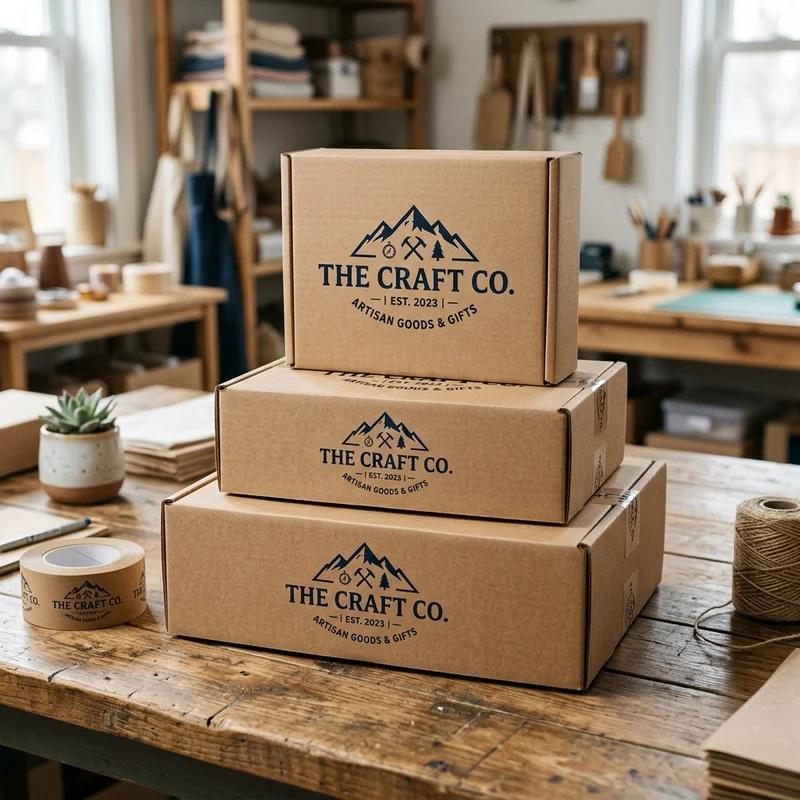
Custom Mailer Boxes
Custom Shipping Boxes
Custom Corrugated Boxes
Custom Folding Boxes
Custom Tuck Boxes
Related Posts
Die-Cut Box Dimensions: Sizes & Custom Shapes Guide
Corrugated Box Dimensions: Sizes & Flute Grades Guide