888-450-3725
In this article
- What Are Custom Corrugated Boxes?
- How Corrugated Board Works
- Flute Types
- Board Strength: ECT vs Burst vs BCT
- Common Corrugated Box Styles
- Sizes and Right-Sizing
- Printing on Corrugated
- Sustainable Corrugated Boxes
- Corrugated Box Types and Uses
- Wholesale Custom Corrugated Boxes: Cost and Minimums
- How to Order Custom Corrugated Boxes
- The Bottom Line
Corrugated is the workhorse of shipping. It is the fluted board behind almost every parcel, carton, and pallet in the supply chain. Picking the right box is a balance. You want to guard the product without paying too much for board or freight. At Discount Box Printing, we make custom corrugated boxes factory-direct for brands across the United States. This guide walks through how corrugated board works, the flute and strength grades that matter, box styles, printing, green options, and how to order at true wholesale prices.
What Are Custom Corrugated Boxes?
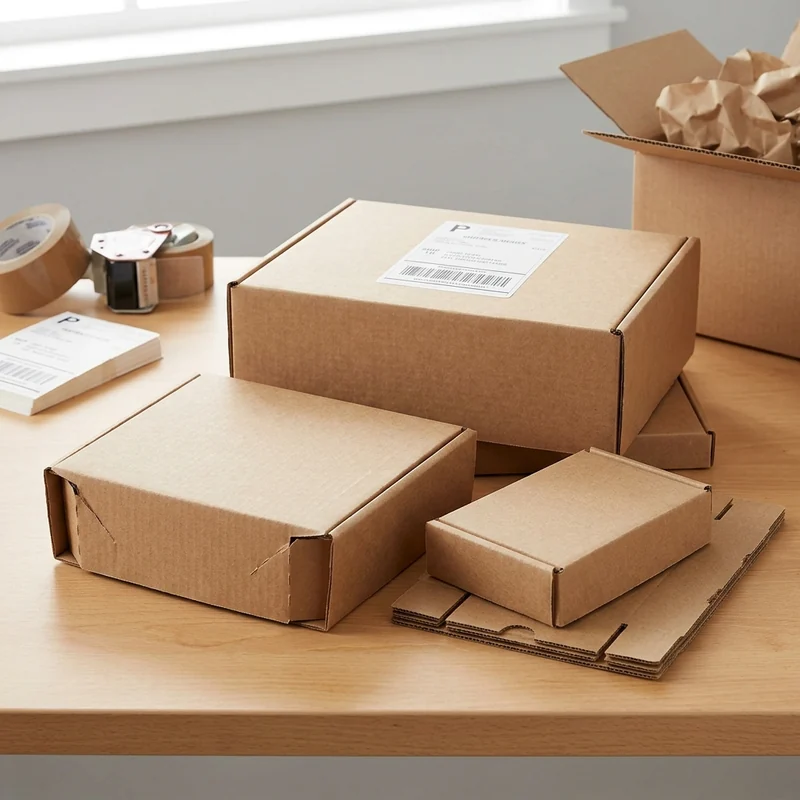
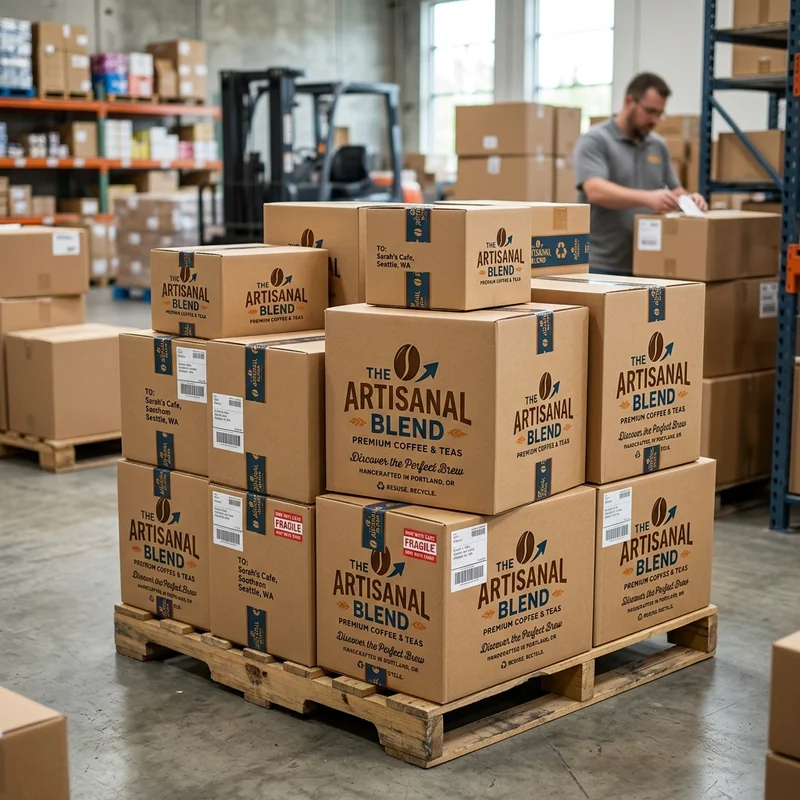
Custom corrugated boxes are shipping boxes made from fluted fiberboard. The board is a wavy inner layer glued between flat liner sheets. We cut and print it to your exact product and brand. The fluting is what sets it apart from the solid paperboard in folding cartons. Those air-filled arches give the board its cushion and stacking strength. Corrugated is also the base of our custom shipping boxes and custom mailer boxes, which are just specific board formats.
How Corrugated Board Works
A sheet of board has two parts. The liners are the flat outer faces. The medium is the wavy fluting glued between them. The number of fluted layers sets the wall type:
- Single wall — one fluted medium between two liners; the standard for most boxes and mailers.
- Double wall — two fluted layers for heavy, fragile, or stacked goods.
- Triple wall — three fluted layers for heavy loads that near wooden-crate strength.
Flute Types
The flute size sets the thickness, the cushion, and the print surface of the board. Here are the common profiles:
| Flute | Approx. Thickness | Best For |
|---|---|---|
| A-flute | ~4.8 mm | Maximum cushioning for fragile goods |
| C-flute | ~4.0 mm | General shipping — the most common |
| B-flute | ~3.2 mm | Crush resistance and a flat print surface |
| E-flute | ~1.6 mm | Thin, printable retail boxes and mailers |
| F-flute | ~0.8 mm | Small, lightweight retail packaging |
Double-wall boards combine two flutes, such as BC or EB. That merges cushion with a smooth print face.
Board Strength: ECT vs Burst vs BCT
Three tests describe how strong a box is. Each one answers a different question:
- ECT (Edge Crush Test) — this measures stacking strength. A machine crushes the board on its edge, and the result is given in pounds per inch. A higher ECT means the box holds more weight stacked on top. That makes ECT the modern way to choose board for pallet shipping.
- Burst / Mullen test — this measures how well the board resists puncture and rough handling, in pounds per square inch. It is the older standard. It is still useful for boxes that take impact in transit.
- BCT (Box Compression Test) — this measures how much top-load force the finished, built box takes before it crushes. It predicts real stacking in a warehouse or on a pallet.
For most e-commerce and retail shipments, a 32 ECT single-wall box is the standard. Heavier or stacked products move up to 44 ECT or double wall. We help you match the grade to the product. The box protects without over-spending on board.
Common Corrugated Box Styles
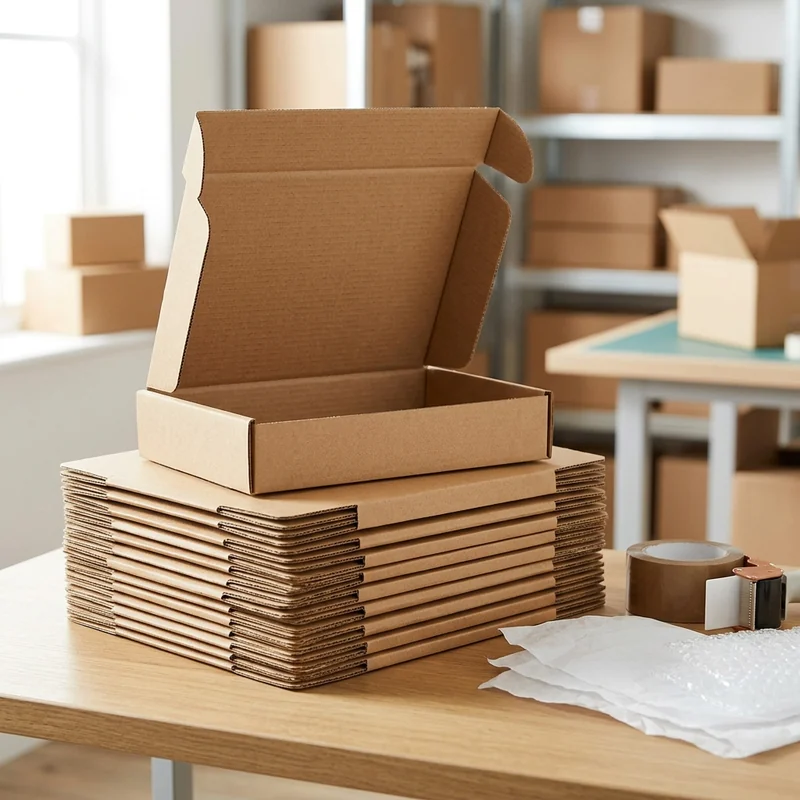
- Regular slotted carton (RSC) — the classic shipping box where all flaps are the same length; cheap and the most widely used.
- Half-slotted carton (HSC) — an RSC without a top, often used with a separate lid.
- Full-overlap (FOL) — overlapping flaps for extra stacking and edge strength.
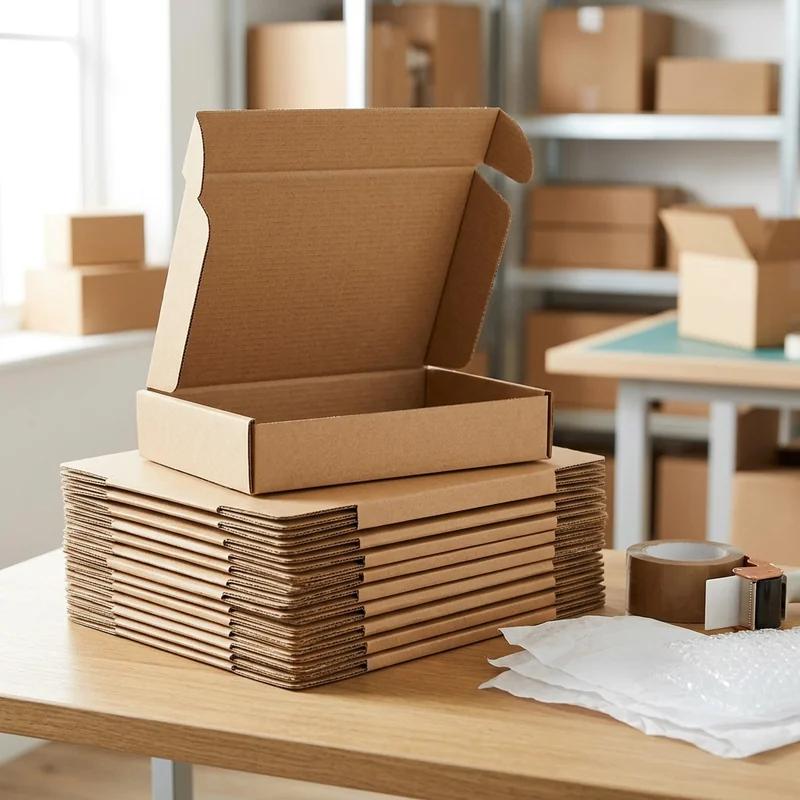
- Die-cut mailer — a one-piece self-locking box for direct-to-consumer shipments; see our mailer box guide.
- Telescoping and tray styles — separate lid and base for heavy or oversized goods.
Sizes and Right-Sizing
Corrugated boxes are measured by interior size (length × width × depth) so the product fits without crushing. Carriers bill by box size as well as weight. So a box right-sized to the product ships cheaper and needs less void fill. These are common starting sizes, all made to order:
| Use | Interior (L × W × D) | Typical Board |
|---|---|---|
| Small parcel | 8 × 6 × 4 in | 32 ECT single wall |
| Medium shipper | 12 × 10 × 8 in | 32 ECT single wall |
| Large / heavy | 18 × 14 × 12 in | 44 ECT or double wall |
| Flat / e-commerce mailer | 10 × 8 × 2 in | E- or B-flute |
Printing on Corrugated
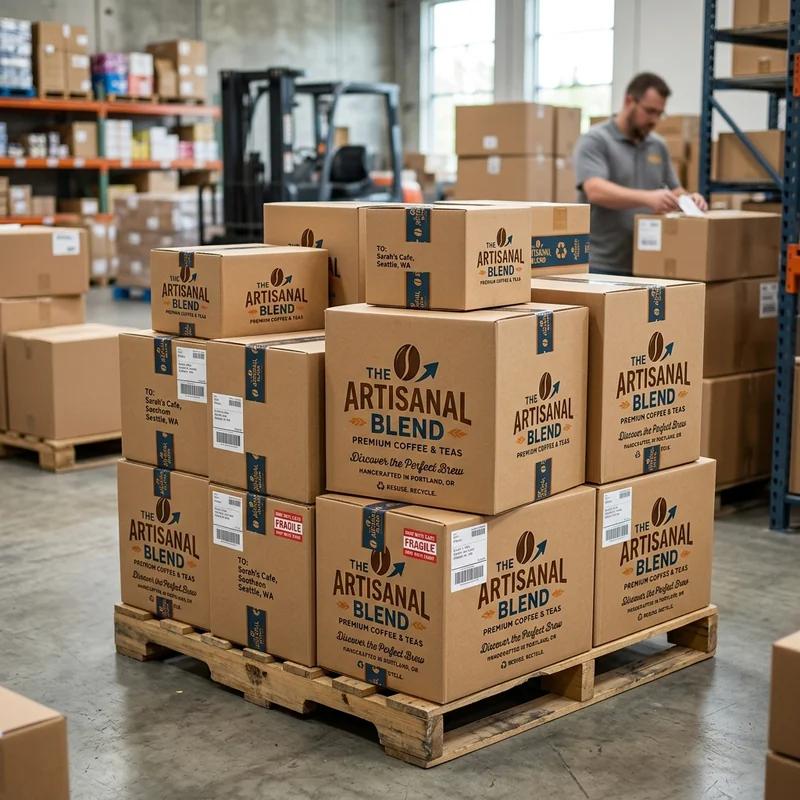
Corrugated can be printed several ways, based on coverage and budget. Direct flexo printing suits logos and simple graphics. Litho-lam suits full-color photo artwork. Digital printing suits short runs and quick turnaround. We print in CMYK and PMS spot colors and can add protective coats. So a shipping box doubles as branding on the doorstep.
Sustainable Corrugated Boxes
Corrugated is one of the most recycled materials in the United States. That makes it a green choice by nature. Recycled-content board, a curbside-recycled build, and soy- or water-based inks lower the footprint further. Right-sizing cuts both material and void fill. Coverage from Packaging World notes that recyclable, paper-based packaging keeps gaining ground as brands answer both new rules and buyer demand. Our eco-friendly shipping boxes are built on exactly these materials.
Corrugated Box Types and Uses
The table below maps common board formats to the pages where you can see options and request a quote.
| Format | Best For | Page |
|---|---|---|
| Shipping boxes | General parcels and freight | Branded shipping boxes |
| Corrugated mailers | Branded DTC shipments | Corrugated mailer boxes |
| Printed mailers | Full-color unboxing | Custom printed mailer boxes |
| Eco shipping boxes | Recycled-content shipping | Eco-friendly shipping boxes |
| Wholesale volume | High-volume fulfillment | Wholesale mailer boxes |
Wholesale Custom Corrugated Boxes: Cost and Minimums
Price depends on size, board grade (flute and ECT), quantity, and printing. Because we make them factory-direct with no setup fees, wholesale pricing sits below reseller rates. And per-unit cost drops sharply as quantity rises. Corrugated is especially cheap at volume. For exact pricing and bulk-tier breaks on your specs, request a free quote.
How to Order Custom Corrugated Boxes
Getting started is simple. Share your product size and weight plus any artwork. Get a free dieline and digital proof. Approve the proof, and we make them factory-direct at wholesale prices with fast turnaround. Not sure which flute or ECT your product needs? Order a free sample kit to compare board grades. Or request a free quote and our team will suggest the right build.
The Bottom Line
Custom corrugated boxes come down to matching the board to the product. You match the flute, wall, and ECT to the weight and journey. Then you right-size it so it ships safely with no wasted material or freight. Get that balance right and the box guards the product, lowers cost, and carries the brand. That is exactly what our team is here to help you do.
Explore More
Ready to put this into action? Explore our Custom Corrugated Boxes range — including Branded Shipping Boxes and Corrugated Mailer Boxes — and read our custom mailer boxes guide for the DTC format. For ongoing packaging industry news and trends, Packaging World is a trusted U.S. source.
Frequently Asked Questions
What are custom corrugated boxes?
Custom corrugated boxes are shipping boxes made from corrugated fiberboard — a wavy fluted medium glued between flat liner sheets — cut and printed to your product and brand. The fluting gives the board its cushioning and stacking strength, which is what separates corrugated from the solid paperboard used in folding cartons.
What is the difference between flute types?
Flute size sets the board's thickness and cushioning. A-flute (~4.8 mm) gives the most cushioning, C-flute (~4.0 mm) is the most common for general shipping, B-flute (~3.2 mm) offers crush resistance and a flat print surface, and E- and F-flutes are thin profiles for printed retail boxes and mailers.
What is ECT and how is it different from the burst test?
ECT (Edge Crush Test) measures stacking strength by crushing the board edge-on, in pounds per inch, and is the modern basis for choosing board for palletized shipping. The burst (Mullen) test measures resistance to puncture and rough handling in psi. BCT (Box Compression Test) measures how much top load the finished box withstands before crushing.
What ECT grade do I need?
For most e-commerce and retail shipments, 32 ECT single wall is the standard. Heavier or stacked products step up to 44 ECT or double-wall board. The right grade depends on the product's weight and how the boxes are stacked in transit and storage — we help match it so you protect the product without overpaying for board.
What box styles can I order?
Common styles are the regular slotted carton (RSC), half-slotted carton (HSC), full-overlap (FOL), die-cut mailer, and telescoping tray-and-lid. The right style depends on the product's weight, how it is packed, and whether you want a branded unboxing.
How much do custom corrugated boxes cost?
Price depends on size, board grade (flute and ECT), quantity, and printing. Because we make factory-direct with no setup fees, our wholesale prices are typically lower than a reseller, and per-unit cost drops sharply at volume. Request a free quote with your specs for exact pricing and bulk-tier breaks.
Are corrugated boxes eco-friendly?
Yes. Corrugated is one of the most recycled materials in the U.S., and boxes can be made with recycled-content board and soy- or water-based inks, recyclable curbside. Right-sizing the box further cuts material and void fill, lowering the overall footprint.
Can corrugated boxes be custom printed?
Yes — corrugated can be printed by direct flexography for logos and simple graphics, litho-lamination for full-color photographic artwork, or digital printing for short runs. We print in CMYK and PMS spot colors with protective coatings, so a shipping box doubles as branding.
What price can I expect for custom corrugated boxes in bulk?
Wholesale custom corrugated boxes start from about $0.10 per unit at Discount Box Printing, with the final price set by size, board thickness, print color count, and run size. Larger orders cut the per-unit cost by a wide margin, and you can send a competing quote to our <a href="/beat-my-quote">Beat My Quote</a> page to lock in a better rate.
What is the minimum order quantity for custom corrugated boxes?
We print custom corrugated boxes with a low minimum order so small brands and new product lines can start without a big spend. Low MOQs let you test art and sizes on the shelf before you scale up, and when you reorder in bulk the per-unit price drops. Reach out for the exact MOQ on your spec.
How long does it take to print and deliver custom corrugated boxes?
Standard turnaround on custom corrugated boxes is about 10 to 12 business days after proof approval, with a 6 to 8 day rush option on most jobs. Timing starts once art and dieline are signed off, so a fast proof reply keeps the clock short. Free US ground shipping is included on every order.
Do you offer free design, a dieline, and a 3D mockup for custom corrugated boxes?
Yes. Every custom corrugated boxes order at Discount Box Printing includes free design help, a print-ready dieline, and a 3D mockup before we go to press. Our team cleans up logos, sets bleeds, and checks food-safe inks when needed, so the box you approve on screen is the box you receive at your door.
Do you ship custom corrugated boxes across the United States?
Yes. We make custom corrugated boxes factory-direct and ship to every state in the US with free ground freight on wholesale orders. Our team at Discount Box Printing coordinates print, cut, and dispatch under one roof, so your boxes land on time whether you order from New York, Texas, California, or anywhere between.
Ready to order your custom boxes?
Free design, low minimums, fast turnaround — at wholesale prices.
Get a Free QuoteRelated Packaging
Products and categories mentioned in this article.
Custom Corrugated Boxes
Custom Shipping Boxes
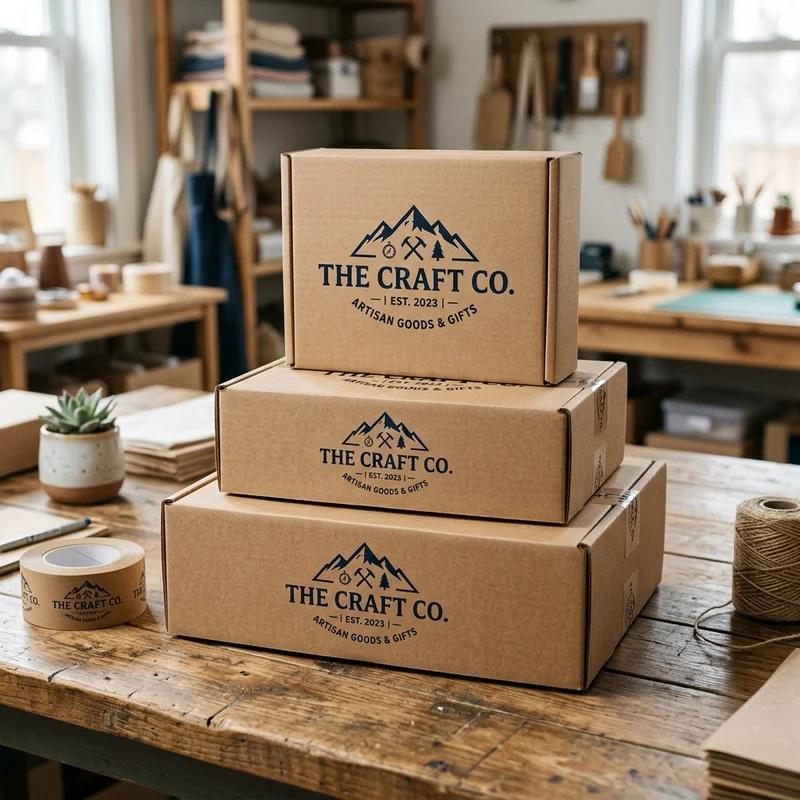
Custom Mailer Boxes
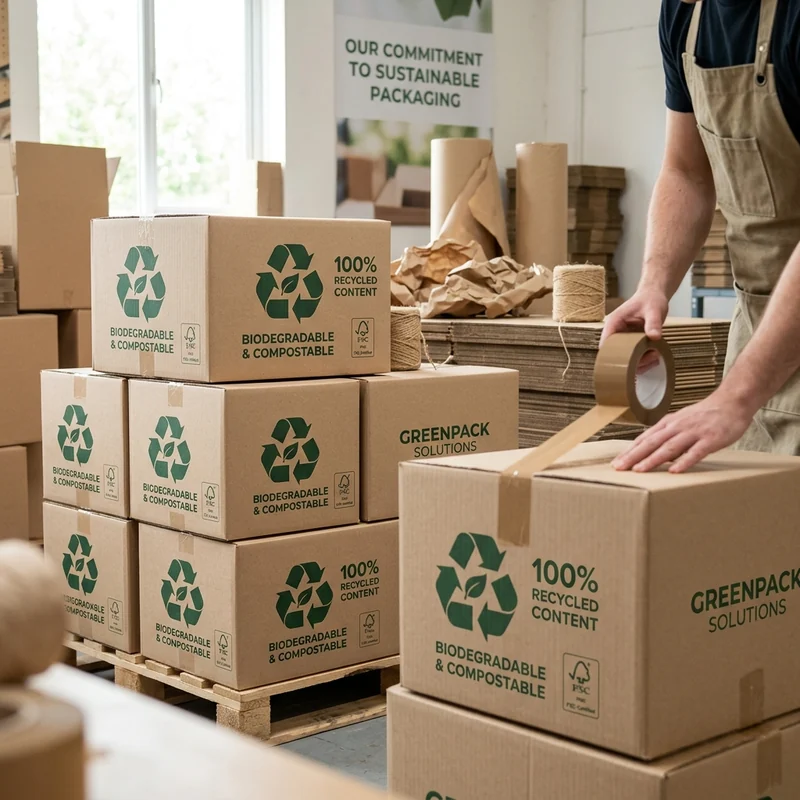
Eco-Friendly Shipping Boxes
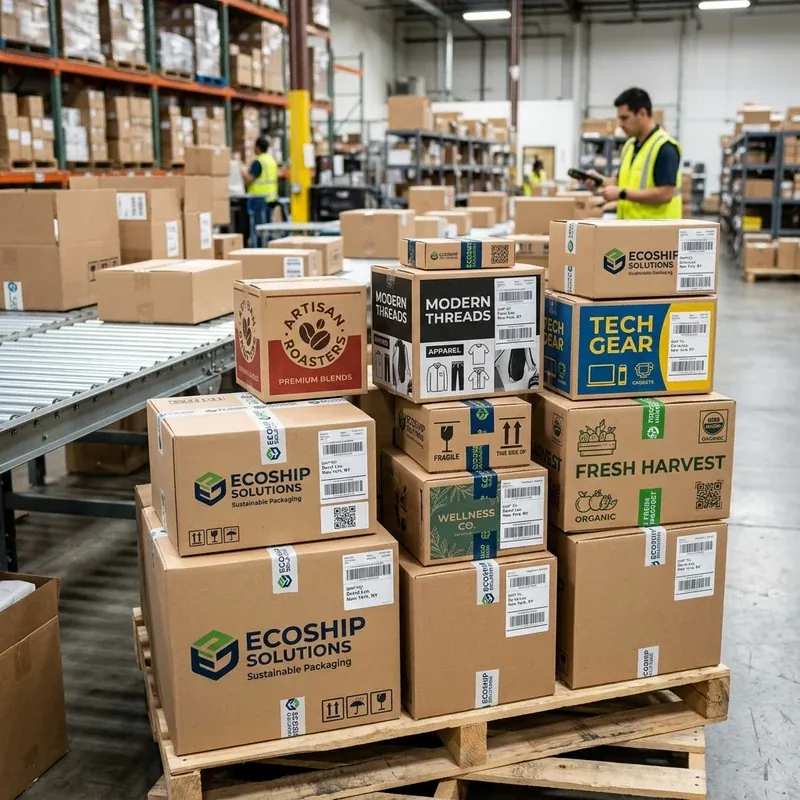
Branded Shipping Boxes